PET Geogrid Fabric for Highway Project in Morocco
Case · 2025-11-26 · 0 views
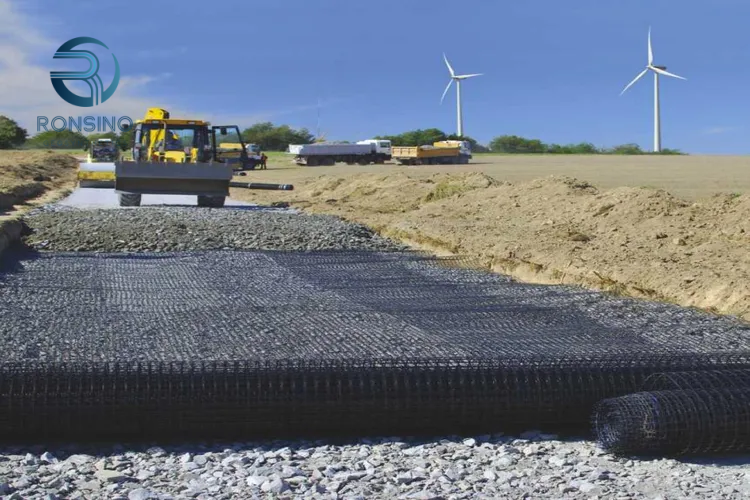
The raw material of PET Geogrid Fabric is polyester fiber. It adopts a warp knitting directional structure, the warp and weft yarns in the fabric are not bent with each other, and the intersections are bound and combined with high-strength fiber filaments to form a firm joint and give full play to its mechanical properties.
The PET geogrid material produced by RONSINO exhibits excellent tensile properties, small elongation, strong tear resistance, and minimal difference in longitudinal and transverse strength. This product has excellent anti-UV aging properties, excellent wear resistance, and excellent corrosion resistance. It also has the significant advantage of being lightweight and can form a tight fit with soil or sand. These characteristics make it outstanding in improving the shear strength of the soil and enhancing the soil reinforcement effect, while effectively improving the integrity and load-bearing capacity of the soil.
CASE STUDY
Location :Morocco
Product(s) :65-65kN warp knitted polyester geogrid
Application : highway
The use of PET Geogrid Fabric
Warp-knitted polyester geogrids can enhance the stability of weak foundations in transportation networks such as highways, railways and urban roads, significantly improve the bearing capacity of the base layer, and delay the occurrence of road cracks, providing long-term reliable protection for key projects under complex geological conditions.
Reinforcement and isolation of dams and rivers in water conservancy projects, strengthen soft soil foundations, enhance their protection capabilities, and improve the bearing capacity and stability of foundations.
The warp-knitted polyester geogrid is used for embankment slope reinforcement, retaining wall reinforcement to enhance overall strength, and soft soil foundations such as roads, railways, and water conservancy.
Warp-knitted polyester geotextile is used as a ballast protective layer, which can effectively mitigate the adverse effects of train vibration and wind and rain erosion. This material wraps the ballast to prevent its displacement and ensure the long-term stability of the track structure. By reinforcing the ballast layer, geotextiles significantly improve the overall stability of the railway subgrade, reducing maintenance requirements and extending the service life of the infrastructure.
Warp Knitting Polyester Geogrid Features
*High tensile strength, high wear resistance
*Excellent mechanical properties and long-term stability
*Anti-corrosion resistance
*Balanced vertical and horizontal strength
*Adaptive to the most terrain shape, especially sloped or crooked surfaces
*Low weight – does not require special equipment to lay out
*Better ability to withstand the differential settlement
*High resistance to dynamic shock loading and seismic activity
*Excellent soil surface adaptability, especially the sloped or curved surface
*High resistance to dynamic impact load and vibration activity
*Excellent resistance to differential settlement
*Reinforcement and stabilization of riverside, embankment and side slope, retaining wall construction
*Easy to deployment, long service life
*High quality, factory price
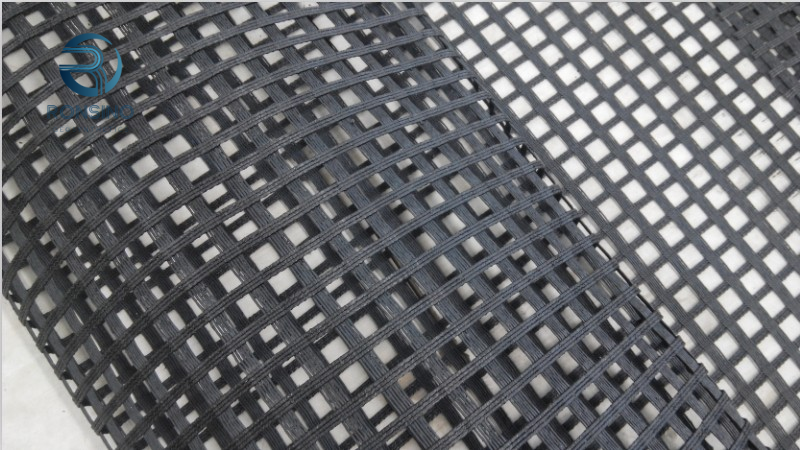
A Moroccan customer contacted us with the aim of purchasing 65-65kN warp-knitted polyester geogrids for his government project of national highway rehabilitation. After receiving product specifications from customers, we strictly check the production standards to ensure full compliance with our manufacturing capabilities. Based on the customer's usage requirements, we developed a comprehensive packaging plan and quickly provided detailed quotations and official inspection documents to assist with their procurement. The project requires a total of 62,805 square meters of geogrids, and we recommend transporting them in a 40-foot high cubic container to optimize logistics and ensure efficient delivery.
As our long-term customers, they have high trust in the excellent quality and price competitiveness of our products. After the project planning is completed, the purchase order is officially issued. The equipment arrived on site approximately two weeks after the order was placed. After ten days of installation, the project was fully completed. After system testing and verification, the project performance was excellent and the customer was extremely satisfied with the solution, which further consolidated trust in our company's capabilities.
Specifications PET Geogrid Fabric for highway in Morocco
Total warp knitted polyester geogrid –62805 squares meters
Specifications – 65-65kN
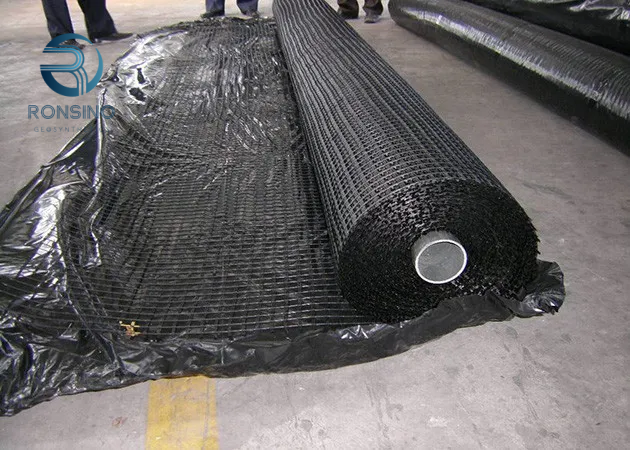
Each roll size is – 4m x100m
Solution
Throughout recent decades, synthetic geotechnical materials, specifically geogrids, have increasingly been employed to construct stabilized earth masses that bolster bridge superstructures and counteract lateral soil pressures, including those induced by seismic activity. Numerous geogrid-reinforced soil retaining walls have been successfully implemented across various countries, demonstrating exceptional performance even during significant geological disasters. However, in Morocco, such engineered solutions remain relatively uncommon. A geogrid-reinforced soil abutment fundamentally consists of an assembly comprising alternating layers of granular fill material and geogrid reinforcement elements.
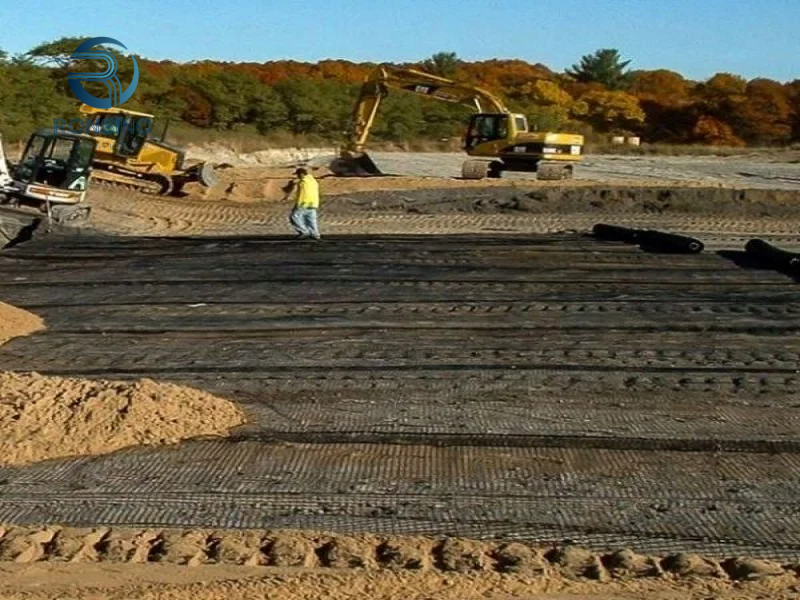
In highway construction, dealing with weak foundations is a critical step. Sand layers and polymer drainage channels are commonly used to reinforce unstable soil layers to avoid uneven settlement and lateral displacement caused by overlying soil pressure. Installing two-way geogrids and silk non-woven geotextiles in the base layer can greatly increase the interface friction resistance and enhance the composite strength of the pavement structure and soft soil. This method can effectively reduce the risk of uneven settlement and shear failure, and significantly improve the overall structural integrity and long-term stability of road embankments.
Construction Method of Warp Knitted Polyester Grid
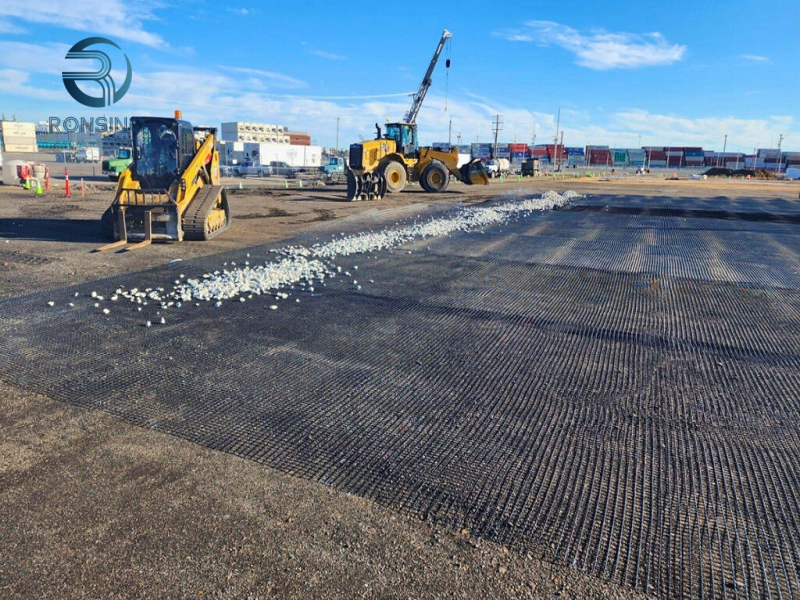
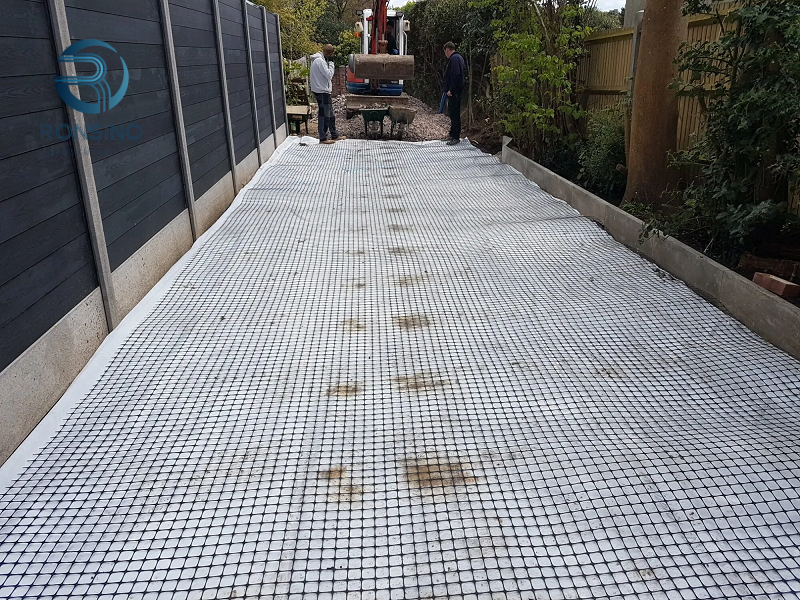
Before installing the grating, the road surface needs to be leveled, finished and cleaned. Traditional grids need to be anchored with special steel fasteners and keep horizontal seams aligned; asphalt-treated geogrids need to reserve a width of more than 5cm and a length of more than 10cm, and apply a small amount of glue to prevent oversaturation; self-adhesive geogrids can be laid directly with only moderate compaction and no additional mechanical fasteners.
After installing the geogrid, the upper layer of backfill material should be carefully laid manually and compacted immediately to prevent prolonged exposure to the sun. Subsequently, the material is mechanically transferred, evenly spread and compacted. The mechanical laying and compaction should be carried out symmetrically from both sides to the center to ensure that the density reaches the standard. Construction vehicles are strictly prohibited from driving or parking on installed geogrids. During construction, the condition of the grating must be continuously checked, and any damage such as breakage, puncture or tearing must be repaired or replaced in a timely manner depending on the severity.
About RONSINO
RONSINO focuses on the research and development and production of high-efficiency cutting-edge geosynthetic materials (such as geogrids, membranes, cloths, etc.), which are exported to more than 36 countries. Core products include plastic/fiberglass/steel-plastic and other geogrids, which are widely used in infrastructure construction, environmental management and engineering reinforcement. The products have passed ISO9001, ISO14001, OHSAS18001, SONCAP, SASO and BV, SGS, Intertek and other authoritative certifications, ensuring excellent performance and compliance with international standards, and providing customers with reliable technical support and engineering solutions.
If you have any questions or inquiries, please fill in and submit the form to contact us.