What is an uniaxial geogrid?
Blog · 2025-08-29 · 0 views
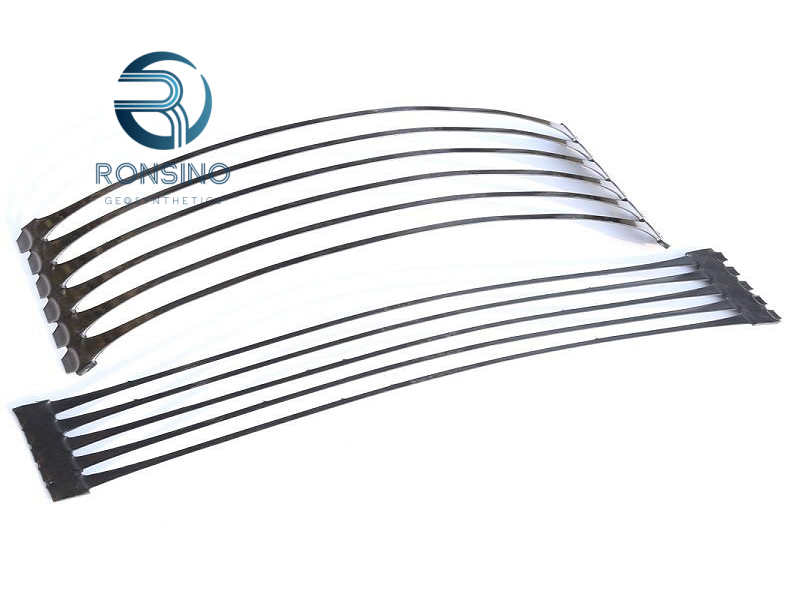
In the field of contemporary construction, RONSINO geogrid has become a core material in infrastructure construction, innovating construction methods by enhancing foundation stability and structural durability. This article will systematically discuss its classification, role, advantages and applications in civil engineering, especially its key role in roadbed reinforcement and construction projects.
1.What Is Uniaxial Geogrid?
RONSINO uniaxial geogrid is a geosynthetic material whose main function is to provide tensile reinforcement in a single direction. This type of material is widely used in civil engineering and construction fields to enhance soil stability, effectively prevent soil erosion, and is used to reinforce various infrastructures such as retaining walls, slopes, and roads.Uniaxial geogrids are typically made from high-density polyethylene (HDPE) or other polymers and are structurally designed to resist tensile properties in one direction (uniaxial). In civil engineering and construction, these materials are widely used in soil reinforcement, slope stabilization, and retaining wall engineering.
2.Benefits of Geogrids in Construction:
2.1Environmental Sustainability:
Through reinforcing terrain and curtailing excessive excavation requirements, geogrids facilitate eco-conscious building methodologies. They diminish the environmental impact of development undertakings while upholding enduring ecological responsibility.
2.2Versatility:
From roadways and railways to retaining walls and landfill liners, geogrids find application across a diverse range of construction projects. Their versatility makes them indispensable components in modern engineering practices.
2.3Enhanced Durability:
Geogrids reinforce soil, preventing structural failure and extending the lifespan of constructed facilities. This durability is especially crucial in challenging environments prone to erosion and ground movement.
3.What Are Advantages of Uniaxial Geogrid?
3.1 Uniaxial Geogrid – Durability & Longevity
Engineered from UV-resistant HDPE or polyester materials, these geogrids demonstrate outstanding resistance against chemical deterioration, biological harm, and harsh environmental influences, ensuring reliable functionality in challenging settings.
3.2 Uniaxial Geogrid – High Tensile Strength in One Direction
Uniaxial geogrids provide superior tensile strength in a single direction (longitudinal), making them ideal for applications requiring load distribution in one primary direction, such as retaining walls and steep slopes.
3.3 Uniaxial Geogrid – Improved Soil Reinforcement
Uniaxial geogrids enhance the load-bearing capability of substandard soils through their mechanical interlocking with adjacent granular materials. This engagement forms a stabilized composite system that uniformly disperses imposed stresses, thereby mitigating localized stress peaks and averting uneven subsidence. Their inherent tensile resilience fortifies the soil framework, guaranteeing enduring functionality in civil engineering initiatives while preserving ecological balance.
3.4 Uniaxial Geogrid – Easy Installation
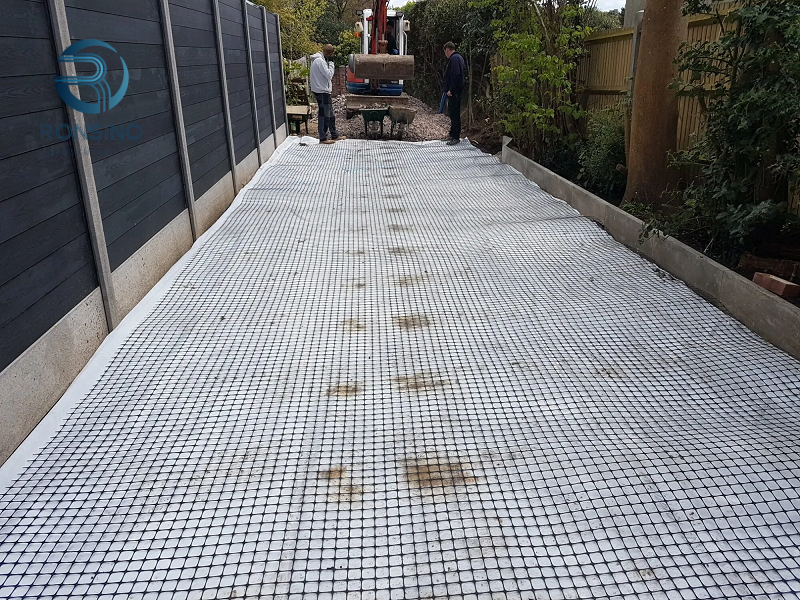
RONSINO uniaxial geogrids are lightweight yet durable, making them simple to transport and maneuver on-site. Their flexible design allows for easy cutting and customization to fit various project requirements. This streamlined installation process helps accelerate construction progress while maintaining structural integrity.
3.5 Uniaxial Geogrid – Prevents Erosion & Slope Failure
RONSINO uniaxial geogrid provides crucial reinforcement support for steep slopes and embankments by enhancing soil cohesion. Its excellent tensile properties ensure that loads are evenly distributed, effectively curbing erosion and avoiding the risk of slope instability. This reinforcement scheme significantly reduces the probability of landslide disasters while ensuring long-term stability.
3.6 Uniaxial Geogrid – Reduces Maintenance Needs
RONSINO one-way geogrid can stabilize weak foundations and improve the overall stability of the pavement structure. Its reinforcing properties significantly extend the life of roads and other infrastructure by reducing stress-induced damage. This brings lower maintenance requirements and long-term economic benefits to engineering projects.
3.7 Improved Soil Stability
Geogrids significantly enhance soil stability by minimizing lateral movement and increasing bearing capacity. This results in reduced settlement and improved overall performance of the constructed structure.
3.8 Uniaxial Geogrid – Cost-Effective Solution
RONSINO uniaxial geogrids enhance soil stability, minimizing the requirement for costly excavation and backfill materials, which helps reduce total project expenses.
3.9 Extended Service Life
Through the alleviation of detrimental impacts caused by environmental elements like soil erosion and uneven subsidence, geogrids significantly enhance the durability of civil engineering initiatives. These materials deliver steadfast stabilization, guaranteeing consistent performance throughout the entire operational lifespan of the construction.
3.10 Uniaxial Geogrid – Environmentally Friendly
Uniaxial geogrid presents an eco-conscious approach for reinforcing soil and stabilizing slopes. Crafted from high-density polyethylene (HDPE) or other sustainable materials, it minimizes excessive earthwork and conserves natural resources. The grid-like configuration fosters plant growth, thereby improving erosion prevention and ecological harmony. Characterized by its enduring performance and reduced ecological footprint, uniaxial geogrid aligns with green construction methodologies without compromising structural stability.
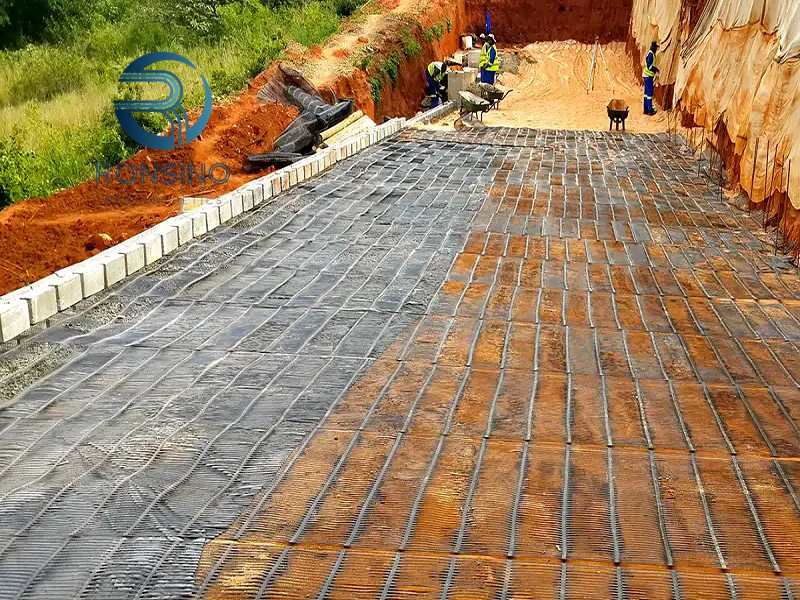
4.Applications of Uniaxial Geogrids:
4.1 Slope Stability:
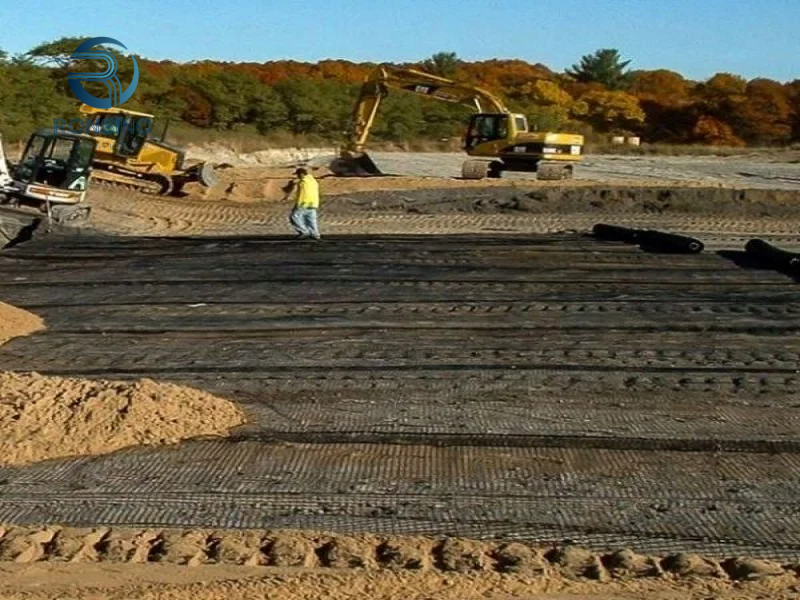
Single-direction geogrids present a robust approach for mitigating slope instability within regions susceptible to landslides or soil erosion. Their exceptional tensile strength significantly augments soil adhesion while simultaneously inhibiting progressive particle migration. This meticulously engineered system delivers enduring slope preservation without compromising the inherent topographical authenticity of the surrounding landscape.
4.2 Soil Reinforcement for Retaining Walls:
Uniaxial geogrids are commonly used behind retaining walls or reinforced earth walls. They help distribute vertical and lateral loads and resist the movement of soil, preventing the wall from failing under pressure.
4.3Bridge Approaches and Embankments:
In embankment construction, uniaxial geogrids provide reinforcement to support structures like bridges, helping maintain the integrity of the embankment and distribute the load evenly.
4.4 Road Base and Pavement Construction:
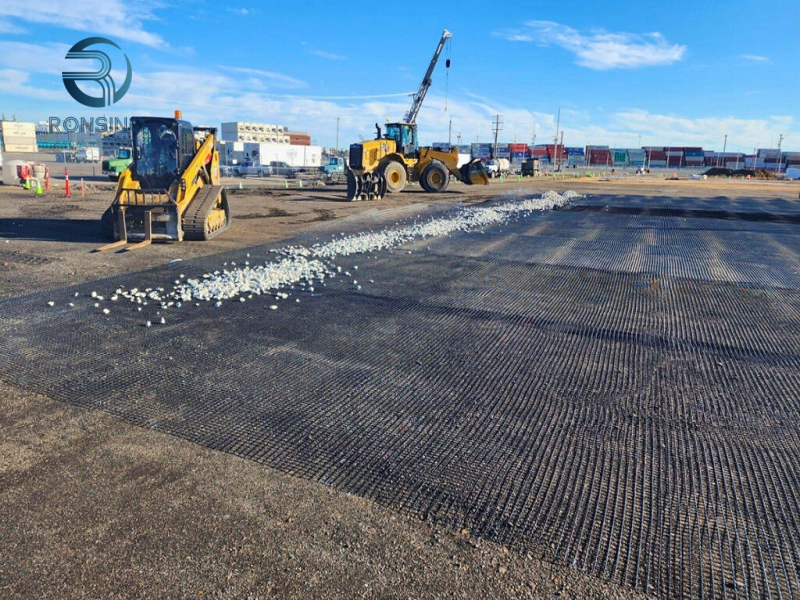
Single-direction geogrids bolster roadway development by fortifying foundational strata, thereby markedly elevating stress dispersion throughout the asphalt assembly. Their exceptional tensile capacity effectively diminishes surface depressions and distortions induced by substantial vehicular loads, thereby prolonging the pavement’s functional longevity. This stabilization technique enhances overall structural integrity while simultaneously curtailing recurring upkeep expenditures.
4.5 Landfills and Waste Containment:
They can be used in landfill projects to stabilize the foundation and prevent shifting, reducing the risk of landfill slope failures.
5.Functionality of Uniaxial Geogrids
Geogrids achieve effective dispersion of stress and significant weakening of concentrated stress by constraining and reinforcing soil. Its unique grid structure meshes closely with soil particles to form a mechanically stable composite layer, which effectively inhibits soil erosion and ensures the long-lasting stability of the engineering structure. The material can also significantly improve the bearing capacity of weak foundations, thus providing technical support for building sustainable infrastructure under complex geological conditions.
6.Conclusion
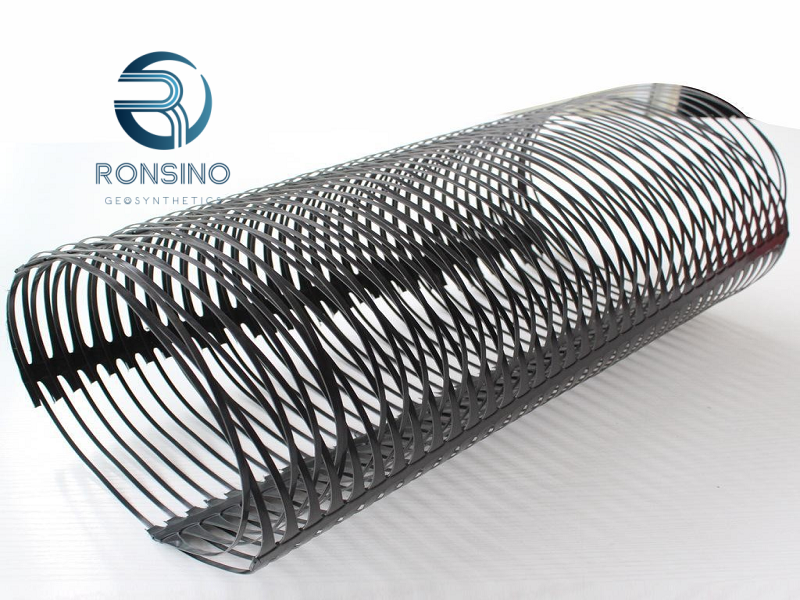
Uniaxial geogrid is a cost-effective soil reinforcement solution that offers excellent tensile properties, long-lasting durability and easy construction. This type of material performs particularly well in scenarios that only need to bear one-way loads, and is commonly used in retaining wall construction and slope stabilization projects.
Choosing a Good uniaxial geogrids Supplier :
RONSINO (Taian Roseno New Materials Co., Ltd.) is a well-known manufacturer and distributor of geomembranes and geotechnical materials in Shandong, China. It focuses on the manufacturing, export and wholesale of HDPE swimming pool membranes, geotextiles, geogrids, geocells, bentonite waterproof blankets and drainage boards and other products. Our products have been sold to more than 100 countries around the world. With its excellent quality and reliability, many international partners have chosen RONSINO as their long-term trusted partner for ten consecutive years.
RONSINO continues to be committed to technological innovation, upgrading of manufacturing facilities and improvement of turnkey project capabilities. Our factory is equipped with advanced automated production lines to produce high-quality lake liners and other geosynthetic materials through optimized process flows. Our diverse range of geosynthetics products are known for reliable quality, superior performance, outstanding durability and best value for money.
RONSINO brand can meet your requirements by our solid technologies, innovative engineering solutions and excellent customer services. RONSINO always tries our best to solve the most complex civil, mining and environmental challenges with our innovative and high performance geosynthetic products. Quality assurance, factory price and fast delivery time are our competitive advantages.